
Pandect Precision Components has transformed precision cleaning with a sealed modified-alcohol system from ILSA-MC, combining automation, efficiency, and superior component cleanliness. Replacing decades-old co-solvent and open-top degreasing methods, the system addresses regulatory pressures, reduces lead times, and enhances testing reliability.
The modified alcohol sealed cleaning systems are still relatively new to the UK market, but they represent one of the possible future-proof solutions of solvent-based cleaning.
Increasing regulatory pressure – particularly regarding PFAS – has created significant uncertainty in the British industrial sector, since 80% of the industrial cleaning business still relies on old-generation fluorinated solvents and related equipment.
In the UK, vacuum-style sealed systems are already in use, but almost exclusively with perchloroethylene. Historically, these systems operated with trichloroethylene; once it was banned, users had little choice but to retrofit machines with carbon scrubbers (activated charcoal) to allow conversion to perchloroethylene.
For reasons that are not entirely clear, the UK market has long favoured open-top degreasing over sealed systems. Yet open-top equipment significantly restricts solvent choice. Sealed systems – whether running hydrocarbons, modified alcohols, or perchloroethylene – are primarily used for degreasing, but their potential extends further.
A key example is flux removal in electronics. In this industrial segment, many UK companies still rely on co-solvent processes in open-top degreasers, combining hydrocarbons with fluorinated rinse agents. While effective, this technology has been in place for around 40 years, and the fluorinated component is becoming both increasingly expensive and progressively less sustainable in the long term.
“For some time, we have been actively seeking a viable alternative to offer to the market,” states Roy Goshawk, Sales Manager at Fraser Technologies (Livingston, Scotland), distributor of ILSA-MC for the UK market.
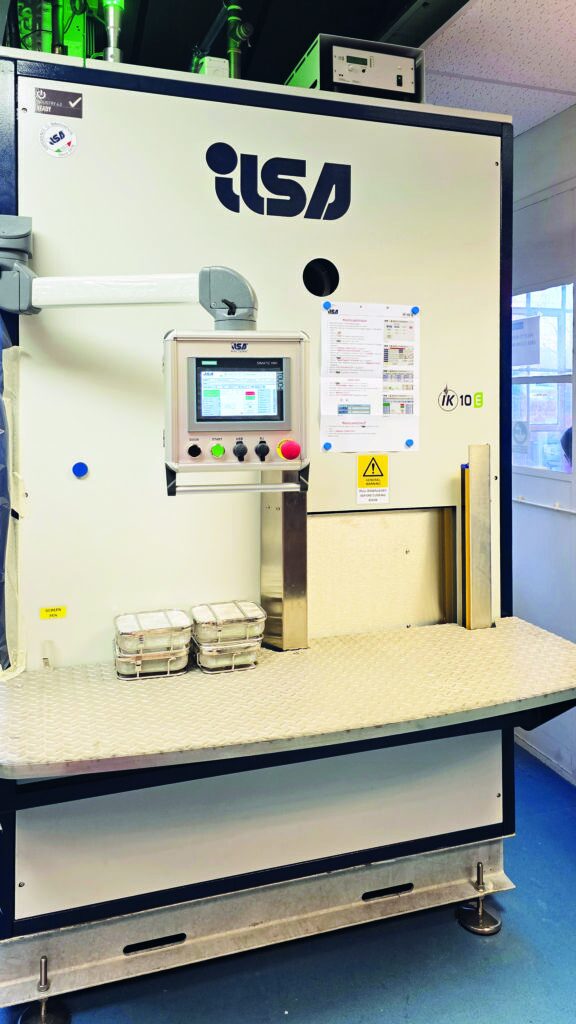
The machine is the IK10, the most compact of ILSA-MC range.
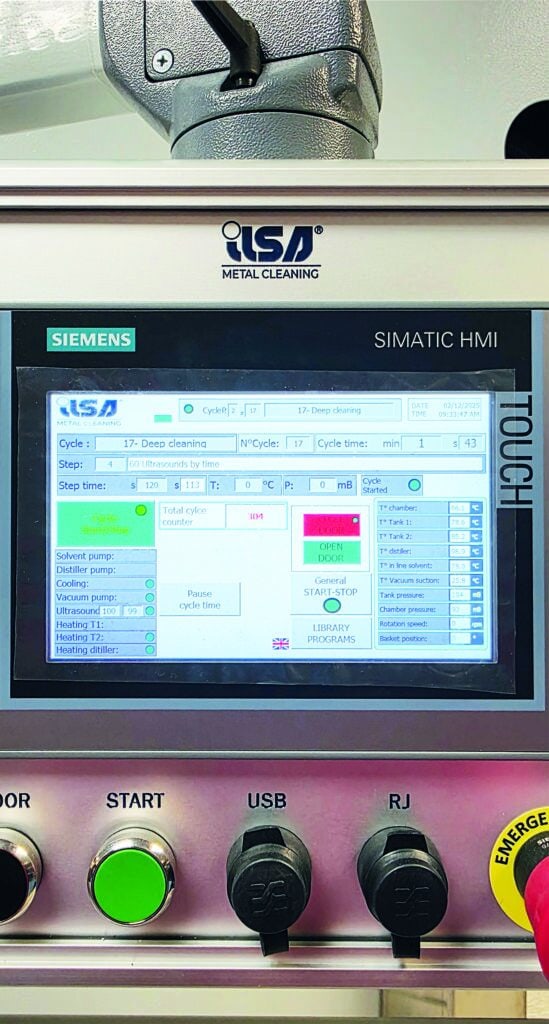
Pandect configured four standard cleaning and drying cycles. that can be checked on the onboard PLC.
“Interestingly, many companies previously using co-solvent technology have shifted to aqueous solutions, such as multi-stage washers. Our current objective is to demonstrate that modern sealed solvent systems can offer a more efficient and future-proof solution, combining performance with regulatory sustainability. We evaluated different technologies on the market, including solutions from ILSA-MC (San Pietro in Casale, Bologna, Italy) and other suppliers. The results of our trials were unequivocal: for flux removal, modified alcohol performs exceptionally well, positioning it as a credible and forward-looking replacement for traditional co-solvent systems. That strategic review ultimately led to our exclusive collaboration with ILSA-MC in the UK market.
“Space constraints are another common concern in the electronics sector. Companies are accustomed to relatively compact open-top equipment with practical basket dimensions, while newer sealed systems often develop vertically – sometimes nearly reaching ceiling height in factories. An additional advantage of working with ILSA is the availability of more compact machines, such as the IK10: they maintain efficient load capacity within a manageable footprint,” Roy Goshawk adds.
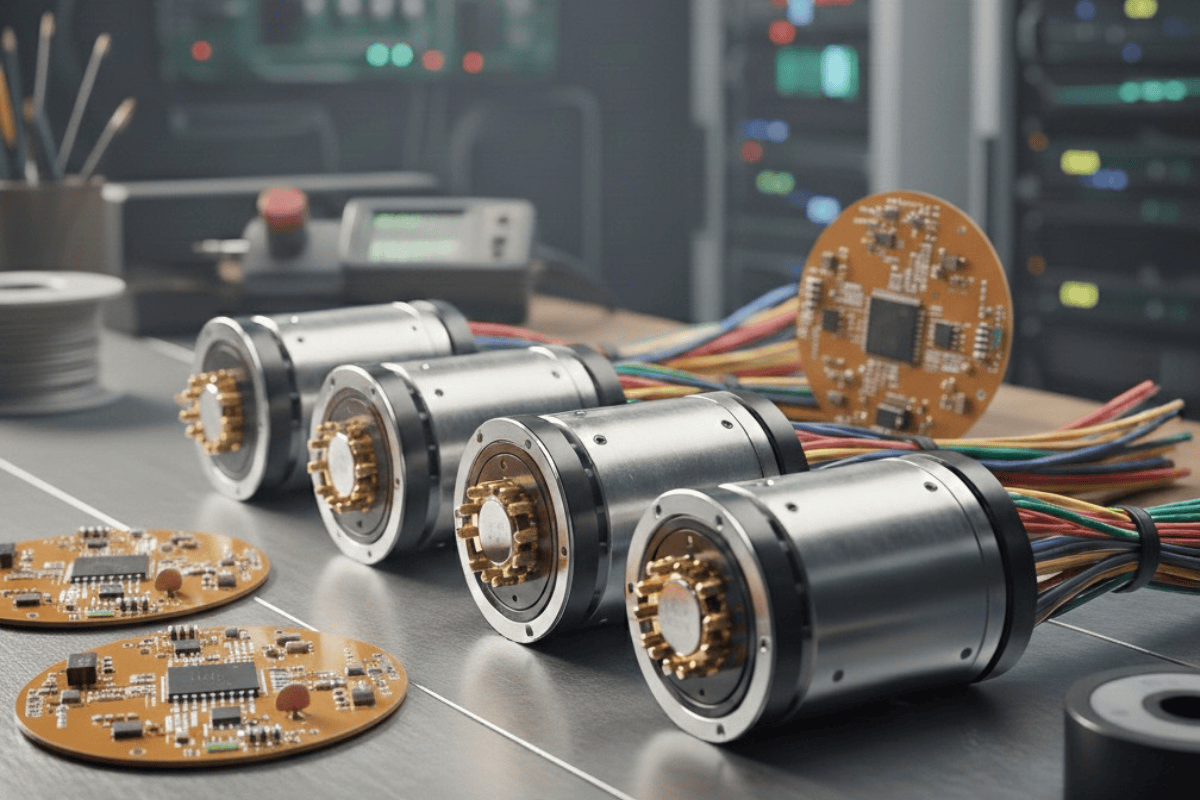
The case of Pandect Precision Components Ltd (High Wycombe, Buckinghamshire) is a paradigmatic example of this transformation in the precision cleaning sector within the electronics industry. The company has been specialising in custom slip ring design and manufacture in the UK for mainly international aerospace, radar, and defence programmes since 1964.
To improve the production workflow, reduce lead times, automate production, and increase the cleanliness of components – a crucial parameter to prevent interference with signal transmission – Pandect installed in 2025 a sealed cleaning machine using modified alcohols supplied by ILSA-MC.
This new cleaning system effectively removes contaminants (specifically flux and soldering residues) and has helped Pandect improve its testing pass rate, increase production, and achieve a premium finish on components.
About Pandect
“Pandect Precision Components was formed in 1964, designing and manufacturing sliding electro-mechanical contact components for the aeronautical industry, where we developed a reputation for providing high-quality turnkey solutions for major British aerospace companies. From aerospace, we expanded into custom slip ring assemblies for radar and defence equipment across land, sea, and air.
We have now been servicing our customers from our design and manufacturing facility in High Wycombe for over 50 years, offering consultative custom slip ring design and production services, including integration of other rotary joints for μwave, fibre optics, hydraulics, and pneumatics, if needed,” says Jim Ferguson, General Manager at Pandect.
“All our components are made to order. Each slip ring is slightly different because it is designed around specific customer requirements. That said, we typically work on batch contracts: a customer will award us a contract covering several years, during which we continuously produce the same product. If refinements or technical modifications are required, they are usually implemented at the end of the contract before starting a new production cycle.”
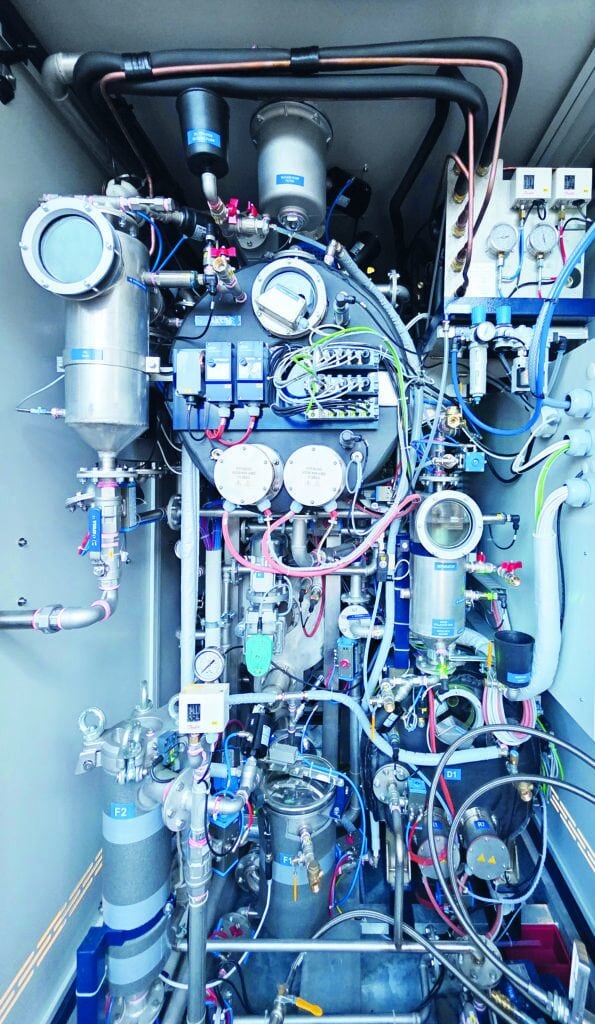
The interior of IK10 cleaning system: equipped with a dual tank, the machine can also perform rinsing. Continuous distillation and filtration remove contaminants and solid particles.
Benefits brought by the new cleaning system
“In terms of production, our process includes assembly, inspection, and moulding,” explains Derrick Nartey, Production Engineer at Pandect. “These are the primary stages involved in manufacturing the final product, and we also have masking or accessory production processes. Most of our components involve soldering, and we also apply protective coatings. Both processes can leave residues that affect visual appearance and interfere with voltage transmission and signal quality, which is critical given the wide range of sizes we manufacture – from relatively large units to extremely small components.
Cleaning is integrated throughout production – it is never really the final stage. It occurs between operations. For example, after soldering or as additional components are assembled, each section typically goes through a cleaning cycle. We also outsource plating operations, and when those parts return, they are cleaned before testing. That is probably the only case where cleaning appears to be a ‘final’ stage, but even then, it applies to a specific module that will later be assembled into a larger unit. Overall, cleaning occurs at multiple stages across production.”
“The introduction of an automatic sealed cleaning machine has significantly improved our workflow. Previously, many components had to be washed manually and dried in an oven – a very time-consuming operation, with one operator spending up to six hours a day on cleaning alone. Now, the cleaning cycle runs automatically, allowing operators to focus on other tasks while the machine is in operation. As a result, lead times have been significantly reduced. This improvement has also enabled us to increase production capacity. One major customer recently asked us to ramp up output under a large contract, and having this cleaning technology in place made it much easier to meet that demand,” Derrick Nartey adds.
“Since introducing the new system, we have seen several quality improvements. Components now have a much cleaner, shinier finish, enhancing overall appearance and giving a more professional impression. More importantly, our testing performance has improved significantly. Previously, some units would pass testing while others failed, requiring rework. Now, we achieve much higher pass rates. The cleaning system effectively removes contaminants, and the integrated drying cycle has been a major advantage.
The drying capability has also allowed us to recover modules that would previously have been scrapped due to moisture build-up causing failures during continuity testing. The ability to fully remove residual moisture has made a substantial difference. Salvaging modules that would otherwise have been discarded is probably one of the biggest benefits for us.”
Three different cleaning processes for maximum flexibility
“Each module is processed according to the cleaning level required. We have configured three cycles customized for our products: a standard cleaning with vapour degreasing and vacuum drying, a deeper cleaning with vapour degreasing, and a low-temperature cycle,” explains Derrick Nartey. “The low-temperature program is particularly important for sensitive modules, as some materials require very careful handling. It is also useful for components that must withstand specific low-temperature conditions during testing.
The vacuum degreasing cycle delivers a very deep clean, penetrating thoroughly into the product. This has been the most effective program for recovering modules affected by moisture. The integrated drying system removes residual dampness that previously caused failures.
One of the biggest advantages of the ILSA-MC system is the ability to run multi-module cleaning cycles. Many modules share similar cleaning requirements, even across different product platforms. For example, modules from PPC 18 through to 700 can be loaded in the same cleaning cycle. Previously, everything had to be separated and processed individually. Now, compatible components can be mixed in a single cycle, using sub-baskets to divide the entire load, saving time and improving efficiency.”
Characteristics of the IK10 cleaning system
“The machine model is IK10, one of the most compact of ILSA-MC range. The basket capacity is 15 lt, ideal for precision applications such as electronic components and dental tools. The machine operates under vacuum using modified alcohol. The customer also chose to include an ultrasonic system for this specific application,” says Veronica Pancaldi, Technical Sales at ILSA-MC. “The cleaning process can include a pre-wash, full immersion with ultrasonics to remove solid residues, and solvent vapours generated by the integrated distiller. During drying, pressure is gradually reduced from 100 millibar down to near zero to fully dry components. Cycle times range from 12–15 minutes, depending on complexity; in this case, cycles run 13–15 minutes. The system performs 4–5 cycles per hour.
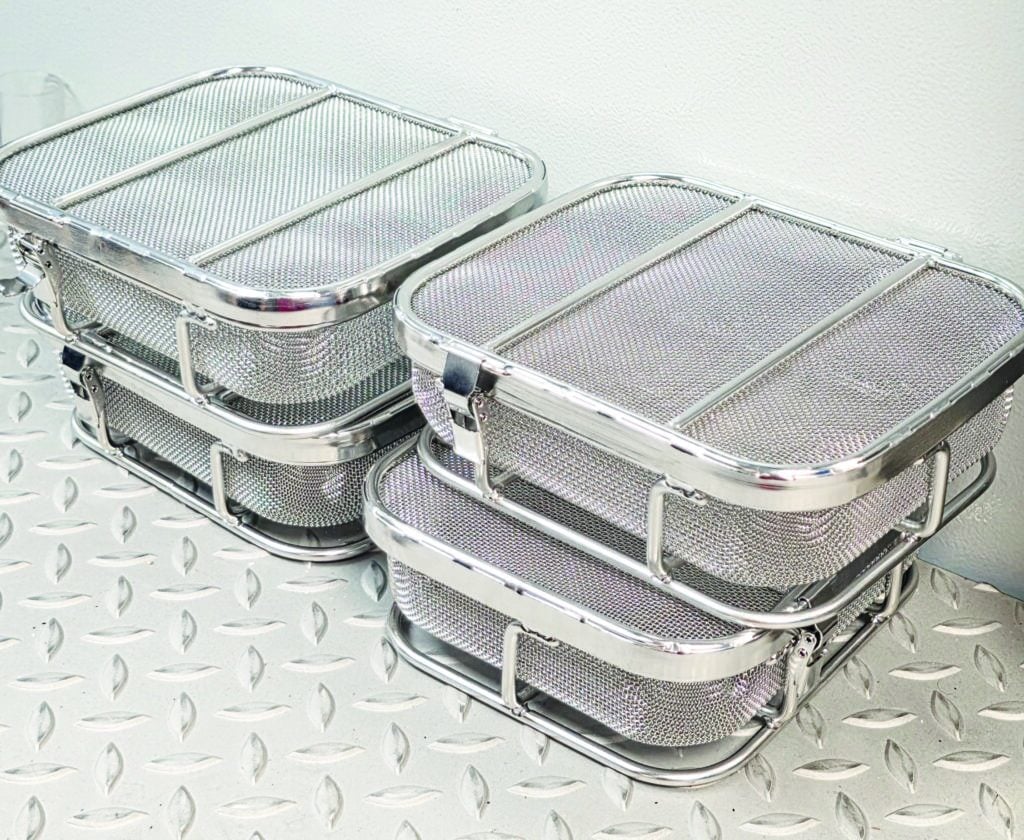
Equipped with a dual tank, the machine can also perform rinsing. The second tank contains pure solvent for high cleaning standards. Continuous distillation and filtration remove contaminants and solid particles, ensuring consistently high-quality results. The system includes one main basket and four inner baskets, allowing different parts to be cleaned simultaneously.
“Sometimes we process parts in bulk; other times just one or two units, depending on production flow,” explains Derrick Nartey. “We recently ordered additional baskets for high-volume modules to accommodate increased production. Dedicated baskets create a more circular workflow, making production smoother and more streamlined.”
Transforming Cleaning: From Cumbersome to Cutting-Edge
“The inefficient and cumbersome nature of our previous washing operations, combined with increasing regulatory pressure on fluorinated solvents, prompted us to explore technological alternatives,” declares Jim Ferguson. “Trials with modified alcohols were excellent, so the next step was investing in our own sealed machine. It has been one of the best purchases we have made.
Compared to our old setup, the difference is substantial. Cleaning quality is outstanding, even for modules with epoxy residues and burnt solder marks. Components are restored to an almost premium finish, and wiring, cables, labels, or paperwork remain intact. The only drawback is that ink markings may be removed, which we addressed with colour-coded heat shrink for traceability.”
“At first, our main concern was managing chemicals, but filling, emptying, and routine maintenance require minimal effort,” Derrick Nartey concludes. “We experienced a learning curve at the beginning, and only our most experienced operators currently manage the system. We are also exploring Wi-Fi connectivity for remote technical support in Italy despite operational reliability has been excellent since installation.”

From the left Roy Goshawk, Sales Manager at Fraser Technologies, Veronica Pancaldi Technical Sales at ILSA-MC, Derrick Nartey at Pandect.