Do you have a specification for cleanliness within your process?
No? But, clean is clean…..right?
Fraser Technologies Managing Director, Graham Fraser, would disagree.
“There is no such concept as completely clean! So, we need to determine, what is clean enough?”
At Fraser Technologies we regularly encounter customers who are unaware of the level of cleanliness they require. While this may seem a simple and obvious question, truly understanding the answer is critical. The implications of getting the answer wrong can have a lasting impact on your business, from a financial perspective and most importantly, the quality of your final products.
What is "clean enough"?
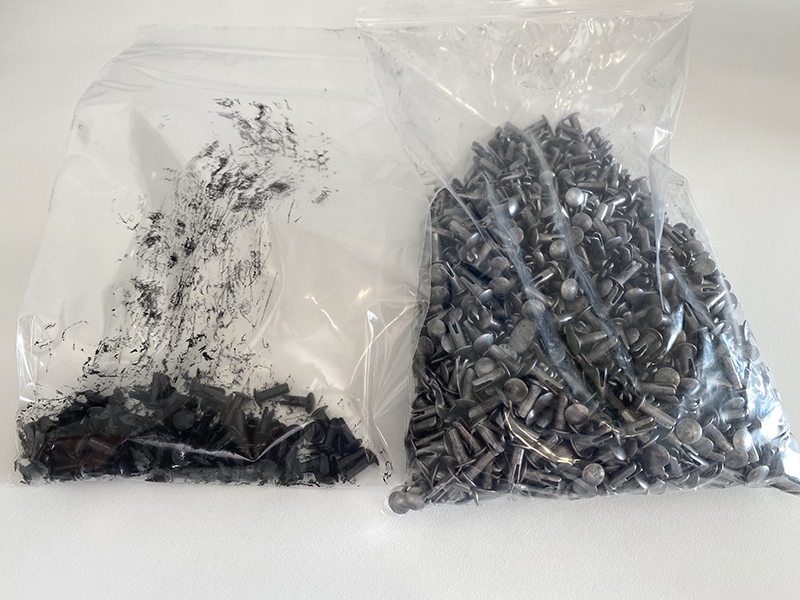
Rivets comparison dirty (left) to clean (right). Solvent cleaning.
The cost of cleaning - A fine balance:
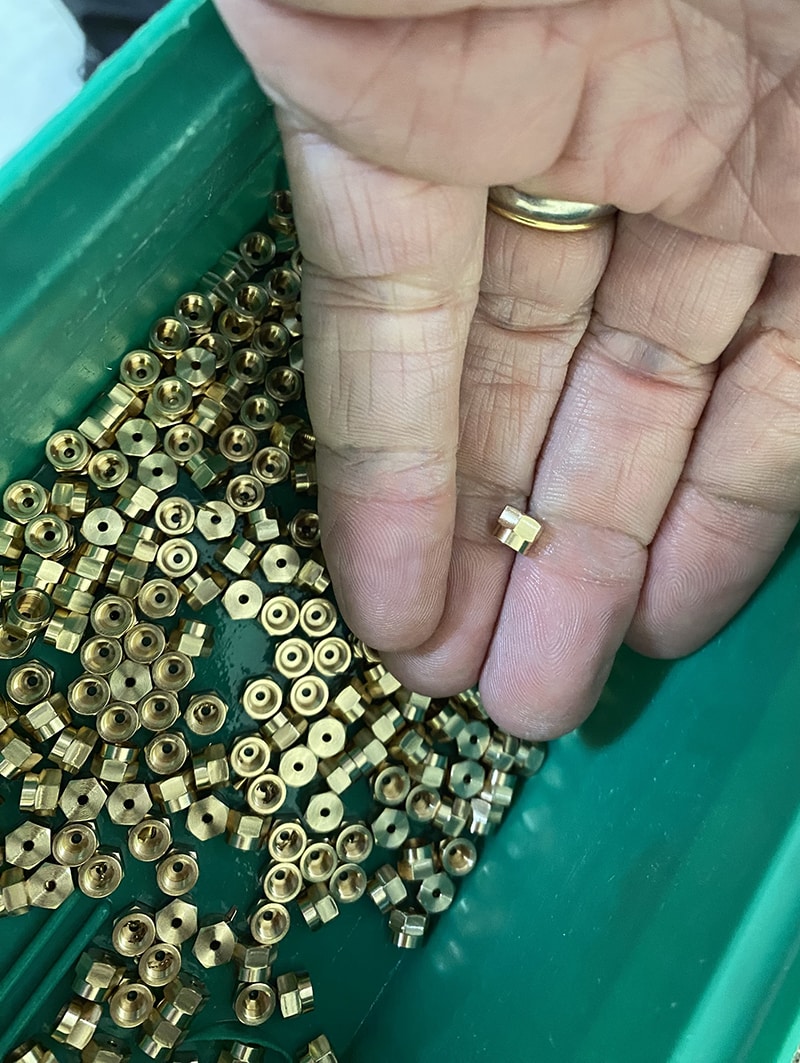
Copper turned parts, neat cutting oil. Post clean photo, solvent cleaning.
As mentioned in the introduction to this article, we believe that 'completely clean' is a fanciful concept. The art to a good cleaning process is knowing the level of cleanliness required to meet the needs of the end user.
This varies greatly by application, industry, and material. Fraser Technologies offer a comprehensive evaluation service that not only identifies the most suitable cleaning process for you; we also keep your wallet in mind.
Underspecified cleaning processes can be detrimental to a business’s production capabilities, impacting their bottom line. Consistency and repeatability are key when determining a cleaning process, and this can only be achieved once a cleanliness specification is in place.
Reject rates are a telling KPI linked to cleaning, and an underspecified process will result in high levels of rejected parts. One of Fraser Technologies long standing customers, specialising in imaging equipment, are only able to determine if a part has been sufficiently cleaned during its acceptance testing phase. At this stage, all the component parts have been assembled, meaning a quality failure results in a very costly rejection of the entire unit. Time, money, and materials are wasted because of contamination in one of the component parts. This is easily avoided by determining a robust cleanliness specification and designing a process to meet the required standards.
In a recent case study, by implementing a specification and delivering a bespoke solution converting from aqueous cleaning to solvent cleaning using OpteonTM SF79®, Fraser Technologies were able to reduce the reject rate of a pioneering, well known UK aerospace engine manufacturer by 90%.
Conversely, over-specified cleaning processes can weigh heavily on the wallet also.
Whether it be high costs of capital equipment, high- rates of chemical consumption, or energy hungry processes; there can be significant financial impact on cleaning ‘too much’. This highlights the need for a diligent evaluation service prior to committing to a process.
But how?
Once a clearly defined and agreed cleanliness specification is in place, an assessment of all available cleaning technologies can be conducted.
Firstly, a process audit is needed to identify the materials of construction, as well as the contamination levels and types.
Additionally, a deep understanding of the end-product and how it is used is needed, this helps to develop a foundation of knowledge which informs the analytical methods required.
Each application has a different cleanliness standard, and therefore a different method for analysis. In some applications, there is no need for complicated and costly methods as the ‘eye-test’ will suffice.
Given we work in the field of precision cleaning, a more common technique for the ‘eye-test’ would be under a microscope of a strength suitable for detecting particulate residue or markings. This requires a strong quality management system and operator training to ensure reliability and repeatability in the assessment.
At our disposal are a range of more sophisticated analysis techniques that return quantifiable data. For example, contact angle shear testing gives a qualitative way to evaluate surfaces characteristics by observing the intermolecular interactions between the surface and a water droplet. Additionally, we can determine organic particulate concentrations by conducting a solvent extraction test.
While this is not an exhaustive list, it shows a range of analytical tools available and illustrates the importance of matching applications with the correct complexity of cleaning process.

Neat Oils from a turned parts process. Post clean photo, solvent cleaning.
Tailored approach:

Fraser Technologies defines its core values through three fundamental elements – Evaluate, Supply, and Support.
This encapsulates a full-service commitment, that extends beyond product offerings.
This support begins during the evaluation phase and each application requires a bespoke solution. Through completion of the process audits, analytical tools, and cleaning trials, we are able to offer customers a complete cleaning package suitable for their needs.
Any process offered should be compatible with all materials, meet the customers budget and environmental goals, but most of all exceed the cleaning requirements as determined by the cleanliness specification.
Fraser Technologies stand out by providing a range of evaluation services, including analytical tests, process audits, and cleaning trials. These services aim to optimise cleaning processes, ensure quality, and minimise costs.
Discuss your cleanliness analysis with us today.